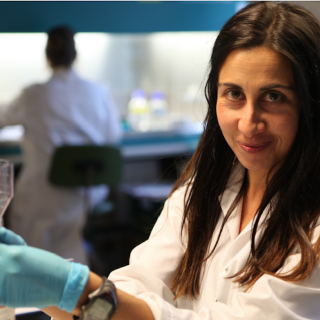
Debora Iglesias-Rodriguez
Biography
Professor Débora Iglesias-Rodriguez is a Professor of Biological Oceanography in the Department of Ecology, Evolution, and Marine Biology at the University of California, Santa Barbara. Her research focuses on the impacts of ocean acidification on marine phytoplankton, and she has played a central role in developing programs in marine carbon dioxide removal (mCDR).
Her team is at the forefront of mCDR research, establishing experimental protocols for ocean alkalinity enhancement (OAE) and generating empirical data on how alkalinization affects phytoplankton performance and diversity.
In addition to her research, she is a dedicated author, educator and mentor, teaching courses centered on the carbon cycle. She has contributed to multiple white papers on ocean acidification and mCDR and has been an invited speaker at major global forums, including the IPCC and COP28. She has also spoken on Capitol Hill, advised the U.K. Government on climate change, and served on a National Academies of Sciences, Engineering, and Medicine panel on mCDR.
Dr. Iglesias-Rodriguez earned her B.Sc. in Biology and Biochemistry from the University of Santiago de Compostela (1990) and her Ph.D. from the University of Wales Swansea (1996), where she studied carbon utilization mechanisms in marine phytoplankton. After completing her Ph.D., Dr. Iglesias-Rodriguez was awarded a NERC Fellowship at the University of Bristol, where she investigated genetic diversity in coccolithophores. She subsequently received a NASA Fellowship at Rutgers University, focusing on modeling the global distribution of coccolithophores using satellite data.
Prior to joining the University of California, Santa Barbara, she led a research group at the National Oceanography Centre. There, her work centered on marine bioluminescence and the impacts of ocean acidification on marine plankton.
Research Area
Débora Iglesias-Rodriguez has spent over two decades studying the diversity and function of marine phytoplankton, integrating molecular approaches, carbon physiology, and biogeochemistry in both laboratory and field settings. Her research has focused on identifying the mechanisms controlling plankton calcification under rising carbon dioxide (CO₂) conditions associated with ocean acidification.
Her work is driven by key questions: which organisms will be resilient to increasing CO₂ levels; how the physiology of those that adapt will change; and how these physiological shifts will alter marine biogeochemical cycles.
More recently, her research has expanded into marine carbon dioxide removal (mCDR), with a particular emphasis on ocean alkalinity enhancement as a potential climate mitigation strategy. Through laboratory and mesocosm experiments, her group has produced some of the first empirical studies using coccolithophores and diatoms as model organisms, while also investigating how the diversity of natural populations responds to alkalinization.